 |
 |
|
The Universal Mother: call me by my true name, Queen Isis
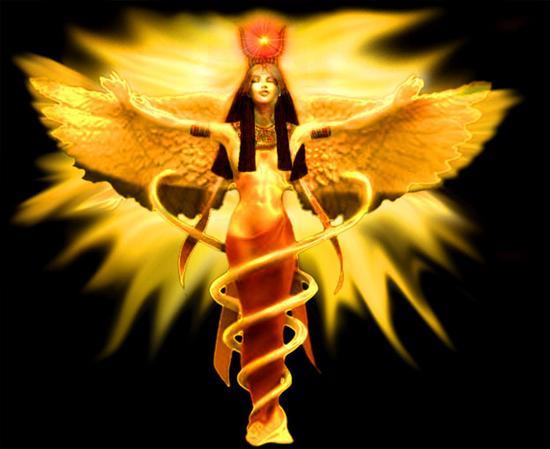
Few figures in mythology have had the influence, popularity and staying power in art and literature of Auset(Ast), more commonly known as Isis. Isis is the Europeanized translation of Auset (Ast) the more popularized version of her name. In the book Black Women in Antiquity, Ivan Van Sertima compiles and edits many stories relating to Black women, some factual, others mythological but all historically relevant. The tale of Isis runs rampant throughout this text with multiple scholars referring to the ancient myth to buttress their works. Also in other works such as Griffiths' The Origins of Isis, Apuleius' The Golden Ass, and in Colums' Myths of the World, we see the mythical description of this mother goddess in literary form. Mythology is often not given proper respect and acknowledgement due to its grounding, especially African mythos. When coupled with the extant information of ancient African cultural data that isn't known in large part, certain ideas do not share the common level of respect with better known themes in the West. This leads us to have a situation where the importance of such tales is known by few. The story of Isis may have its origins in ancient Africa, but her narrative and iconography goes beyond culture, time and geography. Since mankind and civilization began in Africa, it is logical that we look to this source for this great wealth of knowledge which springs eternal from these writings and other artistic representations. Many authors and artists throughout the ages have written and created artwork extensively about this African goddess which encompasses love, family, death, perseverance, symbolism and other events that are woven in the human drama. Whether it’s in textual form and artistic depiction, we see the prevalence of Isis and her story for millennia. The tale of Isis has been told and retold throughout history. Although it changes slightly depending on the narrator, it still has transcended the chronologies, continents and people while still maintaining its Ancient African temper. Isis (Ast) is married to her brother Osiris (Ausar), and they both rule the land. Osiris and his brother Sut, more popularly known as Set, are at odds because Set (Seth) is jealous of the praises that the people and gods have bestowed upon Osiris. Set govern by jealousy wants to rule in his brother’s place. This resentment leads Set to kill Osiris. In part of killing his own brother, Set cuts Osiris into 14 pieces and placed his body parts all over the world. The tears that Isis sheds after the death of her husband created the Nile River, which is what the ancients credited with sustaining them. Nevertheless, the love that Isis had for Osiris did not allow her to just accept her husband's demise. Isis set about looking for his missing body parts to place him back together finding all but one, his phallus. So in place of that, the obelisk was erected to symbolize him and his resurrection. When Griffith describes in The Origins of Isis, he translates the 4500 year old religious hieroglyphs carved on the walls, "for the great Isis, who tied the girdle at Khemmis, when she brought his garments and her incense in front of her son, Horus the young child, that he might traverse the earth with his white sandals, and go to see his father Osiris", this tells how her story ends and segues into the Horus myth taking his place among the more powerful deity myths. Being a part of the original trinity of man, woman and child, Isis is often depicted in portraits and statues sucking the baby Horus. Horus then grows up to have a prevailing myth of his own attached to his lore. The linkage between Isis and African (as well as other non-African) civilizations is expressed in this text as well as others. When we peruse the Black Women in Antiquity text, we first come across Isis in the essay entitled Egypt’s Isis, The Original Black Madonna, by Eloise McKinney-Johnson. In it she states “Because Ancient Egypt was a matrilineal culture…Isis often appears in art with her son, Horus, on her lap. She is, thus, the prototype for similar depictions of the Christian Madonna and her Christ child.” Isis (Ast) was able to conceive the child of Osiris, named Horus (Heru), through the process of a virgin birth. As just did the Virgin Mary conceive her son Christ through the process of a virgin birth. Among the many examples of this is the one made in 330 BC, The Statuette of Isis and Horus, which resides at the Metropolitan Museum of Art. We then learn that “Isis’ profound influence upon major concepts of the Virgin Mary and her Christ child continues today in the many portrayals of the Black Madonna, particularly those in early Christian art and those icons in the Byzantine tradition. I speak regularly about the African origins of Isis and her global influences. Even though she is primarily known as an Egyptian deity, her roots can be traced to ancient Ethiopia as well. In Lucius Apuleius’ work The Golden Ass, he states that Isis said to him “Both races of Aethiopians, whose lands the morning the sun first shines upon, and the Egyptians…call me by my true name, namely, Queen Isis.” Not only that, but the Isis prototype shows up in globally. As Edward Carpenter states in Pagan and Christian Creeds, “Finally, we have the curiously large number of black virgin mothers who are or have been worshiped. Not only cases like Devaki the Indian goddess, or Isis the Egyptian, who would naturally appear black-skinned or dark; but the large number of images and paintings of the same kind, yet extant--especially in the Italian churches--and passing for representations of Mary and the infant Jesus...and images belonging to the earlier shrine would in all probability be preserved with altered name in the later.” Other cultural equivalents are the Greek goddess of agriculture Demeter and the Roman equivalent Ceres, the Greek goddess of love Aphrodite and the Roman equivalent Venus, the Greek goddess of Chastity Artemis and the Roman equivalent Diana, Babylonian/Assyrian deity Ishtar and the Sumarian adaptation Inanna along with the Syrian version Asarte, the Hindi version Kali and many others have Ast(Isis) as their keystone. When we look at Attis and Dionysus of Greece, Mithra of Persia, Krishna of India and others around the world, in their literary composition these gods were each birthed by virgin mothers, so again we see the influence and importance of this Isis in cultural tales outside out Africa. Besides the more common tableaus of Isis with her child on her lap, which is recreated from the Egyptian Pharoes to present day portraits at Sears and even in the opening scene of the hit film The DaVinci Code, Isis is also known in other views. When we read Orpheus's Myths of the World: Isis and Osirus, he states "She breathed into his mouth, and, with the motion of her wings (for Isis, being divine, could assume wings), she brought life back to Osiris", so when we see Isis as a winged goddess you know why. She can be also be shown as a cow due to her image of the mother providing sustenance. In addition, she is often seen holding the ankh, which is the symbol of life, so again we see the idea of life coupled with Isis. When other cultures visualize their deities, the images of Isis are evident. One of the more famous statues of Diana is the Black Diana of Ephesus. She has multiple breasts suggesting fertility due to the fact that Isis is the mother goddess. Ishtar is shown with wings, a takeoff of Isis representing divinity. So in conclusion, Isis is the mother of myths African and a multiplicity of other elements that are included in this society as well as in others past. In Orpheus Myths of the World by Padraic Colum, he starts our journey in Africa. “It is natural to begin with things Egyptian”, is his jump off point in reference to mythological origination. As I have laid out, Isis is no mere footnote in mythological representations spanning the globe and ages. The Roman emperor Caligula is known for acts of extreme debauchery, even worshipped Isis. His level of veneration forced him to build a temple in her honor at the Campus Martius site. A Classicist, theologist, historian, Egyptologist, Black Studies professor, archeologist and the female studies teacher all have to place Isis at the fore. Black Women in Antiquity, The Golden Ass, Pagan and Christian Creeds, Orpheus Myths of the World and The Origins of Isis provide a much needed narratives into the story of Isis. As stated in The Golden Ass," I am Nature, the universal Mother, mistress of all elements., primordial child of time, sovereign of all things spiritual, queen of the dead, queen of the immortals, the single manifestation of all gods and goddesses...though I am worshipped in many aspects, known by countless names, and propitiated with all manner of rites, yet the whole round earth venerates me...and the Egyptians who excel in ancient Egypt worship me with ceremonies proper to my godhead, call me by my true name, Queen Isis." From the story of Isis, what we get comes from much more than what we see. |
||
